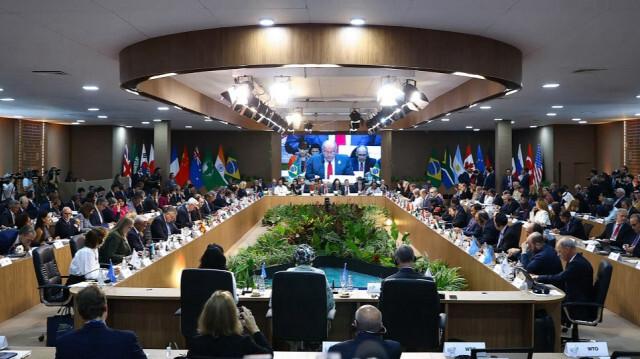
International diplomatic tensions have become increasingly visible as foreign ministers from the world’s major economies gathered in Atlanta for two days of discussions without reaching a common position on several important global issues.
The G20 meeting, which brought together representatives from major economies, was expected to provide an opportunity for countries to discuss international security, economic cooperation and growing geopolitical challenges.
However, disagreements between participating governments prevented the group from issuing a joint communiqué.
Instead, the meeting is expected to conclude with a statement from the chair summarizing the discussions.
Major International Disagreements
Several important issues contributed to the lack of agreement.
Russia’s war against Ukraine remained one of the most difficult subjects, with participating countries maintaining sharply different positions.
Other topics included tensions involving Iran, international trade policies, US tariffs and China’s activities in the South China Sea.
The disagreements also became visible during diplomatic events surrounding the meeting.
A traditional group photograph involving foreign ministers was cancelled after European diplomats objected to the participation of Russian Foreign Minister Sergey Lavrov.
The incident highlighted the political divisions affecting international cooperation.
Why Does the G20 Matter?
The G20 represents some of the world’s largest economies and plays an important role in discussions about international financial stability, trade and economic development.
Its members account for a substantial share of global economic activity, making cooperation between them particularly important during periods of uncertainty.
Although the Atlanta meeting did not produce a unified position on several major issues, discussions continued on subjects such as supply chains, energy transportation and freedom of navigation through important international waterways.
What Comes Next?
The lack of agreement demonstrates how difficult international diplomacy can become when countries have conflicting political and economic priorities.
Nevertheless, the discussions may provide a starting point for further negotiations ahead of the next G20 leaders’ summit in Florida.
The challenge for world leaders will be finding common ground on issues that affect not only their own countries but also the wider international community.
For millions of people around the world, decisions made through international cooperation can influence economic stability, energy prices, trade and security