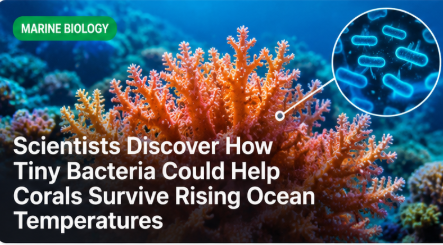
Scientists have uncovered a fascinating relationship between coral reefs and the microscopic bacteria living inside them, offering new insight into how marine ecosystems respond to rising ocean temperatures.
A study published in Nature Microbiology on October 22, 2026, found that certain bacteria associated with corals can produce steroid hormones that influence the animals’ immune responses during heat stress.
The discovery highlights the importance of the microscopic organisms living within marine ecosystems and could help researchers better understand coral resilience.
The Hidden Role of Coral Bacteria
Researchers investigated bacteria belonging to a group known as Endozoicomonas, which are commonly associated with coral organisms.
Through laboratory experiments and biological analysis, scientists found that these bacteria can convert cholesterol into hormones including testosterone and progesterone.
These compounds were shown to influence the coral’s immune-related activity under elevated temperature conditions.
The findings reveal that bacteria may play a more important role in coral health than previously understood.
Why This Discovery Matters
Coral reefs are among the most valuable ecosystems in the world’s oceans. They provide habitats for marine species, support coastal communities and contribute to biodiversity.
However, increasing ocean temperatures can place significant pressure on coral colonies, making them more vulnerable to disease and other environmental challenges.
Understanding how coral-associated microorganisms influence their hosts could help scientists develop better strategies for studying and protecting these ecosystems.
The research does not mean coral reefs are now protected from climate change. Instead, it provides another important piece of information about the complex biological relationships that influence coral survival.